
Frequently Asked Questions
Q: WHAT DISEASES CAN HOMEOPATHY TREAT?
The short answer is that we don’t treat diseases, we treat the person. Meaning that Homeopathic treatment stimulates the body to heal itself. Homeopathy does not just get rid of your symptoms, it deals with why you have them. The remedies treat disease by restoring overall health to the body.
Experience has shown that Homeopathy can be effective for many people with serious and chronic conditions, as well as common and acute illnesses. For a listing of the kinds of conditions we have treated in our practices, see Conditions.
Q: HOW DOES HOMEOPATHY DIFFER FROM CONVENTIONAL MEDICINE?
Conventional medicine:
- Treats your symptoms, not the underlying cause
- Brief office visits
- All allopathic medicines have side effects
- The treatment is routine – everyone with GERD, for instance, gets the same type of medication, there is no allowance for individuality
Homeopathy:
- Treats the root cause of illness as well as your symptoms
- Safe, natural, energetic medicines
- Gives you the time you need to tell your story
- Individualized treatment
Q: IS HOMEOPATHY SAFE FOR CHILDREN AND INFANTS?
Your child is unique to us. We take the time to get to know your child and to choose a remedy that is based on their specific expression of symptoms. Which is to say, your child may get a different remedy than another child with the same condition because we treat each person individually. Some examples of uniqueness used in homeopathic casetaking are: response to stress, body temperature, food cravings, perspiration, sleeping habits, activity choices and physical symptoms and physique.
- Treats inherited tendencies to disease, those that are seen to run in families
- Safely strengthens the child’s immature immune system, unlike traditional medicines which weaken the body
- Heals recurring illnesses such as ear infections, skin conditions and asthma because it treats the root of the problem: the underlying energetic imbalance
- Treats behavorial difficulties (ADHD, aggression, etc.) without adverse side effects such as those found in psychotropic drugs
- Easy to administer and tastes great
- Adequate time is spent to truly understand the child
Q: IS IT JUST PLACEBO EFFECT?
Homeopathy’s effectiveness with infants, unconscious individuals and animals indicates that the remedy’s action cannot be attributed just to the placebo effect.
Q: WHEN SHOULD I USE CONVENTIONAL MEDICINE?
There are conditions for which conventional medicine should be your first choice for treatment. Homeopathy can still complement these treatments to support the body’s healing efforts.
- When a situation is life-threatening or emergency treatment is needed, e.g., deep wounds requiring stitches, severe blows to the head or body, protruding broken bones, hemorrhaging, unconsciousness, severe flair ups of chronic conditions, etc.
- Any time a diagnosis is needed
- Conditions requiring surgical intervention
- Extreme pathologies that have resulted from the complete breakdown of the body’s healing mechanisms, e.g., deep and worsening infection, autoimmune disease, cancer, etc.
Homeopathy is not meant to replace the advice of your doctor and we recommend that you be under the care of a medical doctor at all times.
Q: WHAT IS THE PHILOSOPHY BEHIND HOMEOPATHY?
Each of us is biologically unique, with unique histories, environmental influences, and patterns of being, including the way we express illness. Thus when infected by the same pathogen, your healing response, i.e. symptoms, may be different from ours. Classical homeopathy recognizes the many dimensions of the human being and aims to see the totality of a person’s illness mental—emotional and physical. It pays particular attention to those symptoms and patterns that are idiosyncratic so that a medicine can be selected that is individualized to the person. This contrasts with pharmaceutical drugs which are aimed at common symptoms… ignoring our uniqueness.
PRINCIPLE OF SIMILARS
The principle of similars is the cornerstone of homeopathy. It says that a substance that produces characteristic symptoms in healthy people will heal a sick person with similar symptoms.
It is an old idea known to Hippocrates and rediscovered by Samuel Hahnemann (1755-1853), a German physician, chemist, and researcher.

Samuel Hahnemann monument in Washington, D.C.
Hahnemann became curious about the healing effects of Peruvian bark, a treatment for malaria, and tested it on himself by taking repeated doses. He developed symptoms like those of malaria and hypothesized that the bark’s ability to cure was related to its ability to produce symptoms similar to the disease. This was the beginning of Hahnemann’s quest to find an alternative to the dangerous and ineffective treatment methods of the late eighteenth century.
PROVINGS
Dr. Hahnemann left traditional medicine and began to experiment with the principle of similars. Over the next 20 years, he tested mineral, vegetable, and animal substances on himself and other healthy subjects and meticulously recorded the effects he observed. These drug provings became the foundation for his encyclopedia on drug effects, the Materia Medica, still used by homeopaths today to match remedies with physical and psychological symptoms in patients.
SUSCEPTIBILITY
Contrary to popular belief, it isn’t just exposure to the infectious agent that makes us sick, but there must also exist some weakness or disruption in our healing system. We all can tell of the time when everyone around us came down with the flu and we escaped it! Some factors that can influence susceptibility include:
- Inherited predispositions to disease
- Poor self-care
- A history of using suppressive drugs
- Mental or emotional stress
- Exposure to environmental toxins
Constitutional homeopathic treatment aims to strengthen a person’s vitality and reduce their susceptibility to illness.
DIRECTION OF CURE
After a lifetime of witnessing what happened as sick people became well, Constantine Hering, the father of American Homeopathy, observed that the curative process tends to progress in three directions. The most recent symptoms disappear first, followed chronologically by symptoms that occurred earlier in life.
For example, if a person with eczema was treated with suppressive creams after which they developed allergies, in the process of healing, once the allergies are cleared, the eczema will return briefly.
Symptoms move from within to without, from the most vital to the least vital functions. So someone with disease in a vital organ may later experience skin eruptions as the healing process continues. Symptoms also disappear from above to below, starting with the head and continuing down to the hands and feet. This can be observed very clearly with skin disorders.
Q: WHEN DID HOMEOPATHY START? WHERE?
Samuel Hahnemann (1755-1853), a German physician, chemist, and researcher is the founder of Homeopathy.

Sam “The Man”
Hahnemann became curious about the healing effects of Peruvian bark, a treatment for malaria, and tested it on himself by taking repeated doses. He developed symptoms like those of malaria and hypothesized that the bark’s ability to cure was related to its ability to produce symptoms similar to the disease (known as the principle of similars). This was the beginning of Hahnemann’s quest to find an alternative to the dangerous and ineffective treatment methods of the late eighteenth century.
Dr. Hahnemann left traditional medicine and began to experiment with the principle of similars. Over the next 20 years, he tested mineral, vegetable, and animal substances on himself and other healthy subjects and meticulously recorded the effects he observed. These drug provings became the foundation for his encyclopedia on drug effects, the Materia Medica, still used by homeopaths today to match remedies with physical and psychological symptoms in patients.

The Hahnemann Monument in Washington, D.C. was built in 1930 to honor the founder of Homeopathy
In 1810, Hahnemann published the first text on homeopathy, The Organon, which he updated throughout his life with what he and his colleagues learned from decades of experience.
Homeopathy became very popular and spread quickly because it proved so effective compared to the conventional treatments in use in the mid-1800’s. It was especially superior in treating infectious epidemics. For example, during the London cholera epidemic in 1854, the mortality rate was 50 percent for patients treated in conventional hospitals, compared with 16 percent for those treated in the homeopathic hospital.
HOMEOPATHY IN AMERICA
Some of Hahnemann’s followers translated his Organon into English and moved to the United States. Homeopathy’s popularity, as well as the criticisms by homeopaths of traditional allopathic philosophy and practices, particularly suppressive drugs, posed a threat to “orthodox” medicine. When the American Medical Association was founded in 1846, it was able to forbid the study or use of homeopathy in all its schools and by all its members. This contributed greatly to homeopathy’s decline in the U.S.
By 1890, there were 60 homeopathic medical colleges in the U.S. and the President of the United States had his own homeopathic doctor on staff.
Over the past few decades, the use of homeopathy has steadily grown around the world as the limitations of conventional medicine have become apparent and people have become more trusting of alternative approaches. Britain, France, Germany, India and Israel all have very strong homeopathic colleges, hospitals and clinics. Homeopathy is used by some 30 million people in Europe alone! In many countries, insurance coverage is routine and many physicians practice both homeopathy and conventional medicine.
Homeopathy is experiencing a revival in the U.S. as people have become dissatisfied with conventional medicine’s lack of individualized treatment and less confident in its safety and effectiveness in treating common illnesses.
HOMEOPATHIC REMEDIES
Q: WHAT ARE HOMEOPATHIC REMEDIES MADE FROM?
Homeopathic remedies are made from a mother tincture of the medicinal substance to be used. The source of the remedy may be a plant, mineral such as salt or gold, or animal such as the ink of the squid.
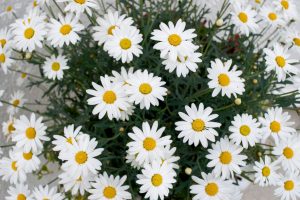
Bellis Perennis is a common homeopathic
remedy for pain after surgery
This tincture is repeatedly diluted in highly purified water and shaken vigorously, a process called dilution and succussion.The more times the mixture is diluted and succussed, the more potent and deeper acting the medicine becomes. The process of dilution and succussion is highly regulated in homeopathic pharmacies. This mixture, called a tincture, is then dropped onto small sugar pills or pellets for easy administration of the remedy.
POTENCIES

The strength or potency of a homeopathic remedy is designated by a number representing the number of times the tincture is diluted and succussed (shaken vigorously), followed by a Roman numeral that indicates the dilution ratio. For instance, a 30C potency is diluted 1:100 (C is for Centesimal) and succussed 30 times. Although any potency can be ordered, the homeopathic community typically uses readily available potencies such as 30C, 200C, 1M, 10M and 50M.
THE LM POTENCY
Towards the end of his life, Samuel Hahnemann, Homeopathy’s founder, searched for a way to administer remedies for sensitive patients. He developed a new scale of dilution and experimented with administering remedies of this potency in water, taken on a daily basis. Typically we prescribe an LM potency under these circumstances:
- Hypersensitivity
- Deep pathology
- Daily use of conventional drugs
- History of using suppressive drugs
- Experience significant stress which
could interrupt the action of the remedy
Q: HOW DO HOMEOPATHIC REMEDIES WORK?
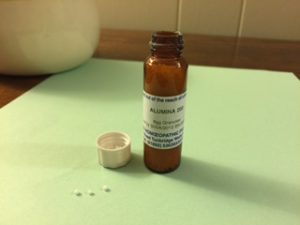
Typical Homeopathic Remedy
REMEDIES ARE ENERGETIC
The remedy is prepared in a homeopathic pharmacy and the resultant power of the
remedy
moves the healing energy of the body towards health. One theory is that when there is resonance between the remedy and the body, the remedy’s energy balances the body’s healing system. Much as the needles in an acupuncture treatment balance the healing energy in your body.
Q: IS THERE ANYTHING I SHOULD AVOID THAT CAN ANTIDOTE THE REMEDY?
Homeopathic remedies are sensitive to certain substances and events, and exposure to these can interrupt the action of the remedy. This is called antidoting the remedy. Here are some common things that could antidote your remedy and should be avoided. If you are exposed to any of these, please let us know during your next follow-up appointment or phone consultation.
-
- Camphor, Menthol, and Eucalyptus – Don’t use such things as deep heating rubs, liniments, Tiger Balm, Vicks, BenGay, Campho-phenique, Karmex, Blistex, Halls throat lozenges, Noxzema products, and some Calamine lotions. Carefully read the labels of lip balms, mouthwashes and throat lozenges. Avoid teas that contain menthol. Avoid prolonged breathing of moth ball vapors.
- Coffee – For many, drinking, smelling and preparing coffee is not a problem while on Homeopathy. However, if you are a person who is very sensitive to coffee and have noticed it having dramatic effects on your nervous system, then it could be an antidote, including decaf. It’s best to discuss this with us.
- Dental work
- Emotional or physical trauma
- Pharmaceutical drugs such as antibiotics and steroids. Be sure to let us know in our initial interview what medications you are taking.
- Recreational drugs – marijuana is proven to antidote remedies.
- Tea Tree Oil – read the labels of soaps, shampoos and hand lotions.
Avoid major changes in lifestyle, routine and medications including vitamins and supplements while we are evaluating the action of the remedy. This makes it much easier to determine if changes in your health can be attributed to the remedy rather than the deletion of some food from your diet or a new supplement you’ve added.
Q: WHERE CAN I BUY HOMEOPATHIC REMEDIES?
We do not sell homeopathic remedies, but here are some good sources
of quality remedies you may purchase.
HOMEOPATHIC PHARMACIES
ABC Homeopathy – abchomeopathy.com
Hahnemann Labs – hahnemannlabs.com
Helios Pharmacy (UK) – helios.co.uk
Natural Health Supply – a2zhomeopathy.com
Pharmaca – pharmaca.com
Washington Homeopathic Products – homeopathyworks.com
Homeopathy Overnight – homeopathyovernight.com
Homeopathic remedies are FDA approved.
Q: EXPLAIN THE DIFFERENT PREPARATIONS AND DOSAGES OF THE REMEDIES
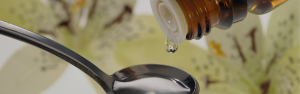
Homeopathic remedies can be taken in several ways:
Dry Dose – taken directly under the tongue
Plussed Dose – dissolved in water
LM Dose – a gentler dose taken in water
For more information, read the section on Taking The Remedy.
DRY DOSE
Pour the pellets directly into your mouth without
touching them and let them dissolve under your tongue. For young children and very sensitive individuals, as well as unconscious or very ill people, the dry dose can be dissolved in water and given with a spoon or medicine dropper: Rinse a clean glass in very hot water and let it cool. In the glass, put 1/4 cup filtered or distilled water, add the pellets, and let them dissolve for 15 minutes. Then give one teaspoon of the mixture.
PLUSSED DOSE (Acute Illnesses)
Rinse a clean glass jar and lid in very hot water and let them cool. Measure 1/4 cup of filtered or distilled water and pour it into the jar. Without touching the pellets, place 2 or 3 pellets into the water.
Allow 15 minutes for the pellets to dissolve.
With the lid securely on, pound the bottom of the jar against the palm of your hand the number of times specified in our instructions. Alternately, one can cascade the mixture with a spoon, lifting it up with the spoon and pouring it back into the jar the specified number of times.
Take one teaspoon of the mixture, and either save the remainder (in the refrigerator) for subsequent doses or throw it away if only one dose is prescribed.
For acute illnesses, the plussed dose can be very useful. A disposable water bottle can be used instead of the jar. Follow the above directions, take a dose of the remedy whenever the symptoms return, which can be every several minutes to several times a day. Use your body as your guide, taking the remedy only as needed. When one potency does not give any relief, move to the next higher potency and follow the same directions. Consult us if you are questioning when to move up, or how often to take a dose.
Acute Case of Dental Surgery
18 year old male had his wisdom teeth extracted. He began treatment with the Arnica 1M dissolved in water immediately after the surgery. There was no pain at this time due to the anesthesia used in the surgery. After several hours some pain started, and he took a tsp. of the mixture he had saved. He slept fine that night, and woke in the morning feeling fine, but by 11am, he felt some pain and tenderness. He took another dose of the 1M after pounding the jar on his palm 20 times. This relieved the pain, and he was pain free until the evening. Then again, he took the remedy, but the pain persisted after 1 hour. He moved to the Arnica 10M and took one dose in water. This was the last dose he needed to recover completely from the surgery.
LM DOSE
Use the following instructions if you are preparing your own bottle.
Preparing your own bottle
• Boil the glass bottle and dropper in filtered water for 15 min. and let it cool completely.
• Fill it just to the neck with filtered or distilled water.
• Without touching the pellet (you can use a wet toothpick), drop 1 pellet into the bottle and let it dissolve. Then follow the directions below.
Taking the remedy
• Before each dose, pound the bottom of the bottle vigorously against the palm of your hand 10 times. This is why you need some space at the top of the bottle. This is called succussion of the remedy.
• Take one dose as directed which may be 10 drops or half a dropper full.
HOMEOPATHIC TREATMENT
Q: WHAT CAN I DO TO SPEED MY RECOVERY?
You can support your body’s ability to defend itself and heal by:
- Taking time to rest when you feel tired or ill
- Eating a healthy and varied diet
- Drinking water regularly
- Getting regular exercise
- Avoid substances that can stop the action of a remedy
- Avoid making major changes in lifestyle, routine, medications and supplements while we are evaluating the action of a remedy.
- As much as you can, avoid substances and situations that you know will trigger your particular conditions.
Q: WHAT SHOULD I DO IF I GET A COLD OR THE FLU?
If an acute illness occurs, avoid taking any drugs, over-the-counter medications, herbal or flower remedies or supplements as you might have done before. Call us first, especially if you are considering a doctor visit. An acute remedy may be called for to support healing and can often replace the need for antibiotics and other drugs. If you are using an LM remedy, discontinue the remedy and call us.
Q: CAN I USE HERBAL EXTRACTS OR FLOWER REMEDIES?
Q: HOW DO I TAKE THE REMEDY?
Taking Your Homeopathic Remedy
After the consultation you will either pick up a remedy from our offices or it will be mailed to you. The remedy is either in the form of tiny white medicated pellets in a small paper envelope or as a liquid (LM potency) in a 2 ounce dropper bottle, depending on your needs and the decision of your homeopath. Instructions will be included with the remedy.
You may not be told the name of the chosen remedy in the beginning of the treatment to avoid influencing the reporting process. Many people want to research the remedy and its properties, which can have a negative effect on your report at the first follow up. Once I am sure of the action of the remedy, I can give you the name. However, I still recommend that you not research it, as it is so hard not to be influenced by what you read about your remedy!
What is a dose?
In classical homeopathy combination remedies are not used, each dose is made from a single remedy. The typical dose is a single, one time, dry dose. The exception to the one time dose is in acute illnesses and the LM potency, which may be repeated more often. Many of you have take homeopathy before in other ways, most commonly low potencies take daily or multiple times a day. The remedies I use are higher potencies, not meant to be repeated often. It is crucial in case management to know WHEN to repeat, the body asks for the remedy when it needs it. Otherwise, if you repeat too often, you may derail the healing process and make it difficult to get back on track.
When taking the single, dry dose, the exact number of pellets is not critical. A single dose is usually 2-3 pellets. If you drop some, don’t worry about it as long as you get at least one pellet. Likewise, if they are crushed in the envelope, they are still good, and in that case you can even lick the envelope! The reason the number of pellets is not critical is that you are taking the “energy” of the medicine and not the actual material substance.
For Women: Do not take if you are expecting your period in a few days. Instead, take it on the fourth day of your period.
When taking the liquid medicine (the LM), you will find that the dropper only fills halfway when you squeeze it, so take two half droppers as a single dose unless otherwise directed by your homeopath.
How to take your dose
Take the remedy before noon for constitutional doses, at least 15 minutes before or after eating, drinking or brushing your teeth. This is so that nothing interferes with the absorption of the remedy in your mouth. Pour the pellets under the tongue directly from the package, and allow them to dissolve.
Giving the dose to children and infants can be done in any of the following ways:
- Have them suck on the pellets to dissolve
- Dissolve the pellets in 1/4 cup filtered water and take 1 tablespoon
- Crush the pellets with a spoon and rub the powder inside their cheek
Taking the Liquid Medicine (LM):
Pour the liquid directly in the mouth. For children, the remedy can be poured into ¼ cup water, stirred, then give 1 tablespoon. Throw away the remainder. This will avoid the danger that they bite the glass dropper.
Be sure to always pound the bottom of the bottle against your palm 10 times before each dose.
What precautions to take
Try to avoid the following as they could possibly antidote your remedy: coffee (if you are sensitive to it), strong perfumes/colognes, tea tree oil, strong smelling linaments, e.g. Tiger balm, Vicks Vaporub, Ben Gay, Karmex, Blistex, Noxzema, Calamine lotions, Campho-phenique, eucalyptus, and camphor. Carefully read the labels of lip balms, mouthwashes and throat lozenges. Avoids teas that contain menthol.
Additionally, dental work, emotional or physical trauma, pharmaceutical and recreational drugs may affect the action of the remedy. Please inform your homeopath if any of these occur.
Avoid major changes in lifestyle, routine and medications, including vitamins and supplements, while we are evaluating the action of the remedy. This makes it much easier to determine if changes in your health can be attributed to the remedy.
Storing the remedy
It is best to store the remedies in a cool, dry place away from magnetic sources, electronics and heat. Do not leave the remedies in your purse, wallet or backpack for extended periods.
Read more about the remedies
- What To Expect
- Remedy Antidotes
- FAQs
To get the most out of your homeopathic treatment, be sure to make regular follow up appointments.
Q: SHOULD I CHANGE MY DIET?
Eating a nutritious diet will support your healing process. We encourage you to make healthy food choices such as eating more whole grains, fruits and vegetables and eliminating foods with chemical additives, trans fats and high sugar content. You should also avoid substances that could interfere with the action of the remedy:
- Coffee: both regular and decaffeinated can antidote a remedy if you are very sensitive to it. If you drink coffee, discuss this with us.
- Caffeine: such as in teas, soft drinks and chocolate. Used in moderation is OK unless you are very sensitive to it.
- Herbal Teas: avoid those with menthol
- Alcohol: used in moderation is OK
- Edible cannabis: again if you are very sensitive to it, the remedy action can be cut short
Q: CAN I USE HOMEOPATHIC MEDICINES FROM THE STORE?
Classical Homeopathy focuses on healing the deep imbalance in the person. Only one homeopathic remedy at a time is used, the one that matches the totality of the patient’s symptoms—physical, mental and emotional—which leads to deeper healing. Over-the-counter homeopathic medicines are aimed at a few symptoms and often include a combination of remedies. We prefer that our clients not self-prescribe unless we have agreed ahead of time. Remedy relationships are complex and what may seem innocuous could actually interfere with the healing process.
Q: CAN I TAKE MEDICATION FOR PAIN OR HEADACHES?
While it’s best to let the body express any symptoms without interfering with them, sometimes in the beginning of treatment pain medication may be needed. If pain or headaches are a recurrent symptom, be sure to let us know in our initial interview so we can discuss how to address this.
Q: CAN I TAKE PRESCRIPTION MEDICATIONS?
Some conventional medicines interfere with the action of the homeopathic remedy so we will review your medications at the initial consultation and at each follow-up visit. Many people find they can reduce or eliminate some prescription medications once they are on a healing path with homeopathy, e.g., daily use of inhalers for asthma or topical skin creams. Do not stop prescription medications without discussing this with us and with your doctor. It is also important that you call us if you are considering taking any new medications.
Q: CAN I GET ACUPUNCTURE OR CHIROPRACTIC TREATMENTS?
Any therapies that are energetic are not advisable while using homeopathic treatment because they make it very difficult to read the response of the remedy. Therefore, we request that you suspend treatments such as acupuncture, Reiki and network chiropractic for six months. You may go for a massage or regular chiropractic adjustments. After a time you might find that adjustments are unnecessary because as balance is restored in the body, the skeleton also tends to fall into alignment.
Q: HOW LONG DO I HAVE TO BE UNDER HOMEOPATHIC CARE?
This is very difficult to predict, as we are all individuals and respond differently to treatment. We ask for a six month commitment and that you recognize that natural healing is a process, not an overnight fix. As you return to health, we recommend that you update your constitutional remedy yearly.